

Gen Z research 2026: Which brands are actually winning
Gen Z doesn’t work the way marketers expected.
Our latest Gen Z research analyzed over 50 million signals across social, search and digital behavior in 2025, tracking how Gen Z actually talks about brands across six distinct types of conversation.
The findings challenge some core assumptions about this generation.
Key findings from our Gen Z research
- The ranking is dominated by fashion, beauty, sportswear and tech. Where is everyone else?
Together, these categories account for over 70% of the top brands Gen Z actively discusses. Fast food, household FMCG, major banks, car brands and traditional luxury are largely absent. - Less than 8% of top Gen Z brand conversations in 2025 mention automotive, fast food, FMCG or financial services.
Brands you’d never put in the same sentence are outperforming brands with 100x the budget.
Glossier, a brand founded in 2014 that turned a blog into products, sits at #2 globally. Palace Skateboards, a niche skate label, outranks Levi’s and H&M. The Ordinary, a $7 skincare brand, ranks ahead of Spotify, Amazon and Disney. - Gen Z cultural relevance doesn’t automatically cross borders.
Dr. Martens ranks #1 in the UK and appears across all six conversation types. In the US, it sits at #40 and appears in just one. Same product. Same brand. Completely different cultural footprint.
The 6 ways Gen Z talks about brands
Brand momentum isn’t one-dimensional. The Gen Z Brand Radar tracks six conversation types, each capturing a different way Gen Z tests, shares and signals relevance.
- The Verdict: Is this brand credible? Where Gen Z decides whether a brand is worth trusting. Ingredient breakdowns, value debates, proof beats hype.
- The Drop: Is this brand culturally urgent? Limited releases, collaborations, countdown moments. Momentum spikes fast and fades faster.
- The Edit: Is this brand worth keeping? The long-term filter. Repurchase essentials. Durability and repeat behavior live here, not hype.
- The Remix: Does this brand enable self-expression? Customization, styling, fit checks, DIY spins. Products become a canvas.
- The Crowd: Would Gen Z recommend it? Peer-to-peer validation. Group chat mentions. Reddit threads. Advocacy compounds.
- The Moment: Is this brand worth showing up for? Launch events, IRL activations, cultural tie-ins. Anticipation and participation, not just the purchase.
A brand can dominate one of these conversations and disappear in another. The brands rising fastest show up across more than one.
Gen Z brand rankings 2026 overview
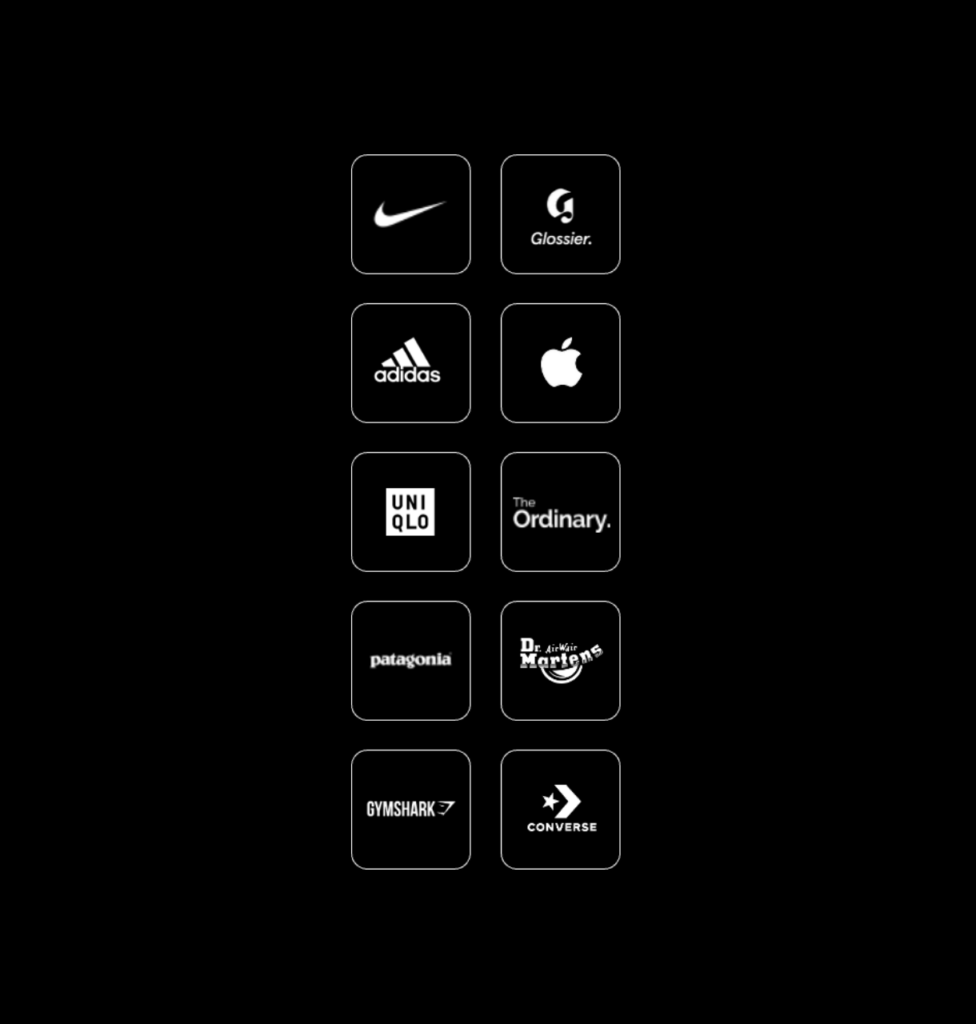
Global Top 10:
- Nike
- Glossier
- Adidas
- Apple
- Uniqlo
- The Ordinary
- Patagonia
- Dr. Martens
- Gymshark
- Converse
US Top 5: Nike, Apple, Adidas, Glossier, Patagonia
UK Top 5: Dr. Martens, Lush Cosmetics, Glossier, BrewDog, Adidas
Only two brands appear in both the US and UK top five. That alone should make any global Gen Z strategy pause.
Download the full Gen Z research report
The Gen Z Brand Radar includes:
- Complete rankings: Global Top 100, US Top 80, UK Top 68
- Scoring across six conversation types for every brand
- Analysis of what’s driving the winners and what’s missing
- US and UK deep dives with brand-level case studies
- Methodology and data sources
Download the Gen Z Brand Radar
Subscribe for access to Basis Signals.
How we conducted this Gen Z research
The Gen Z Brand Radar uses our Ideas methodology, which combines:
- Proprietary data lake. Over 50 million organic signals from social, search and digital behavior across platforms including TikTok, Instagram, Reddit and Discord. What Gen Z says and does when no one’s asking.
- Custom AI models. Brands scored on a composite of conversation volume, sentiment and momentum within each conversation type. Ranked by Strength (average percentile score, weighted 60%) and Breadth (number of conversation types a brand appears in, weighted 40%).
- Human insight consultancy. Our team interprets the patterns and translates them into strategic recommendations.
This approach surfaces signals traditional research misses. Social listening requires knowing what to look for. Surveys capture responses to your questions, not organic behavior. Our Gen Z research captures what’s actually happening.