

Gen Z marketing strategy: Why drops beat campaigns
Steady-state marketing is losing ground. Not because it doesn’t work, but because it doesn’t excite.
The brands gaining traction with Gen Z have figured out something that traditional brand building struggles to accommodate. This generation responds to moments, not presence. Understanding this is fundamental to any Gen Z marketing strategy in 2026, and shows up clearly across the strongest Gen Z marketing strategy examples.
The Drop as a conversation type
In our Gen Z Brand Radar, we track six types of conversation that drive cultural momentum. One of them is The Drop: Is this brand culturally urgent?
Limited releases. Collaborations. Countdown moments. FOMO takes hold when brands create moments worth showing up for. Momentum spikes fast and fades faster.
The brands that dominate The Drop look different from the brands that dominate The Edit or The Verdict. Drop culture rewards urgency and scarcity. Credibility and retention reward consistency and proof. Different muscles. Different strategies.
Gen Z marketing strategy examples: brands winning The Drop
Palace Skateboards ranks #14 globally and #13 in the UK. It appears in just one conversation type. But within The Drop, it dominates.
When UK Gen Z talks about cultural urgency, must-have collaborations and new releases, Palace leads. It does not compete on credibility or routine recommendation. It wins on anticipation and cultural signal. That is concentrated momentum. Narrow, but intense.
Supreme follows the same pattern. #11 globally. The brand invented the modern drop model and continues to benefit from the mechanics it created.
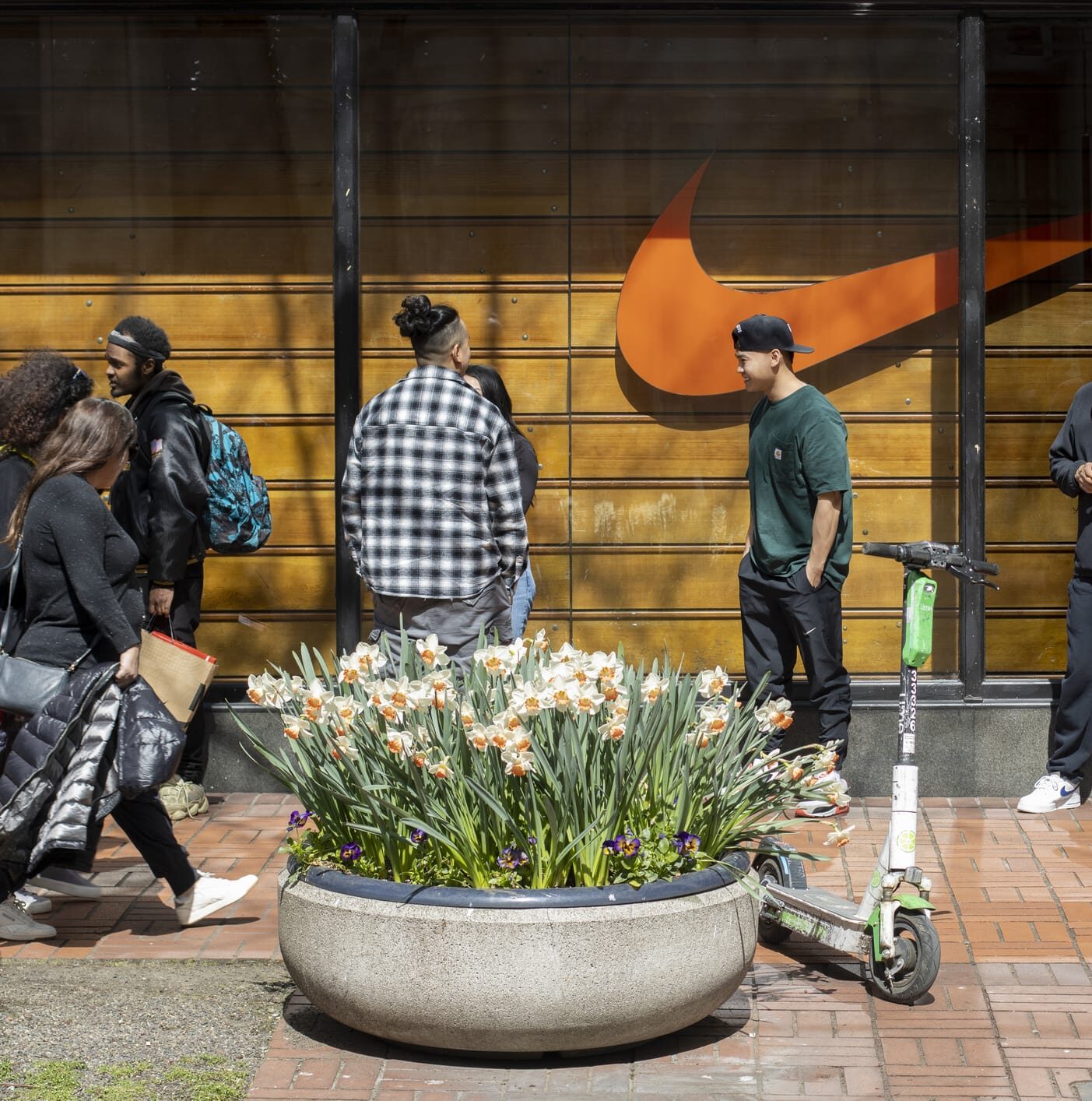
Nike takes it further. #1 in the US. #1 globally. Nike leads The Drop but also leads The Verdict, The Remix and The Moment. It combines urgency with credibility, self-expression and participation. Nike By You lets consumers design their own shoes, turning every purchase into a personal drop limited to an edition of one.
The difference between Palace and Nike is breadth. Palace owns one conversation type intensely. Nike owns several. Both are winning, but in fundamentally different ways.
These are very different Gen Z marketing strategy examples, but both show how momentum can be built through moments rather than constant presence.
Why always-on struggles
Traditional brand building is designed for consistency. Same message. Same look. Same presence. Always on.
This made sense when attention was scarce and brands needed to be memorable through repetition. See the ad enough times and you will remember the brand when you’re in the aisle.
Gen Z’s attention does not work that way. They are not in the aisle. They are on their phones, where the feed is infinite and every post is competing with everything else.
Being always on doesn’t mean being always noticed. It often means being always ignored. Another brand in the background. Another post to scroll past.
Drops cut through because they are not always on. They are now or never. They give people a reason to pay attention today, not someday.

The tension with brand building
This creates a real tension for brand strategy.
Brand building requires consistency. You cannot build memory structures if you are constantly changing. But brand building also requires attention. And attention requires novelty.
The brands navigating this well find ways to create moments within a consistent framework. The core brand stays stable. The drops are variations on a theme, not departures from it.
Look at the contrast between Palace and Patagonia:
- Palace ranks #14 globally and leads The Drop
- Patagonia ranks #7 globally and leads The Edit
- One builds through urgency. The other builds through durability.
But Patagonia does not ignore moments entirely. Limited product releases, the Worn Wear program, seasonal collections. It creates reasons to pay attention without abandoning the consistency that built its credibility.
The best Gen Z marketing strategy examples combine brand consistency with tactical novelty. The brand identity does not change. But the reasons to engage with it this week are always new.
What to track
If you are measuring brand health the traditional way, you might miss the brands building through moments.
Their awareness might spike and fall. Their consideration might fluctuate. But their velocity could be extraordinary. They might be gaining ground faster than anyone else in the category, just not in a straight line.
Tracking momentum around The Drop specifically, alongside steadier conversation types like The Edit and The Verdict, shows you the full picture. You need to see the spikes and the steady lines to understand how cultural relevance is actually being built.
The brands winning Gen Z in 2026 understand that moments matter more than presence, as the strongest Gen Z marketing strategy examples show.
Download the full Gen Z research report
The Gen Z Brand Radar includes:
- Complete rankings: Global Top 100, US Top 80, UK Top 68
- Scoring across six conversation types for every brand
- Analysis of what’s driving the winners and what’s missing
- US and UK deep dives with brand-level case studies
- Methodology and data sources
Explore our Gen Z research series









How we conducted this Gen Z research
The Gen Z Brand Radar uses our Organic Intelligence methodology, which combines:
- Built for this study. Over 50 million organic signals from unprompted public conversation across TikTok, Instagram, Reddit and Discord. What Gen Z says when no one’s asking.
- Custom AI models. Brands scored on a composite of conversation volume, sentiment and momentum within each conversation type. Ranked by Strength (average percentile score, weighted 60%) and Breadth (number of conversation types a brand appears in, weighted 40%).
- Human insight consultancy. Our team interprets the patterns and translates them into strategic recommendations.
This approach surfaces signals traditional research misses. Social listening requires knowing what to look for. Surveys capture responses to your questions, not organic behavior. Our Gen Z research captures what’s actually happening.